Main content starts here.
Foreign Languages > Chiba International Information Square - To foreign residents - > Chiba Nanohana News > Chiba Nanohana News (Past Issues) > Chiba Nanohana News (December 18, 2025)
Update: December 18, 2025
Chiba Nanohana News (December 18, 2025)

Index
I.Festivals and Events
1) Celebrating New Year in Japan
“Oshogatsu,” the first day of the New Year, is the most important holiday in Japan. Japanese people adorn their homes with special decorations such as “kadomatsu,” ornamental items made with bamboo and pine branches, and “shimekazari,” sacred wreaths made of straw rope. Family members and relatives get together and eat traditional Japanese dishes such as “osechi” and “zoni” to celebrate the new year.
Many people take part in “hatsumode,” or the first visit of the year to a shrine or temple, to make wishes for the new year. Some people also go out before dawn to see the first sunrise of the year from mountaintops, beaches, or high-rise buildings.
2) Recommended Spots for Hatsuhinode (First Sunrise of the New Year)
One highlight of New Year’s festivities in Japan is seeing the first sunrise of the New Year, known as “hatsuhinode.” Chiba Prefecture has some of the best places in the country to see the sunrise. Start off 2026 the right way at one of these spots!
1.Cape Inubosaki (Choshi City)
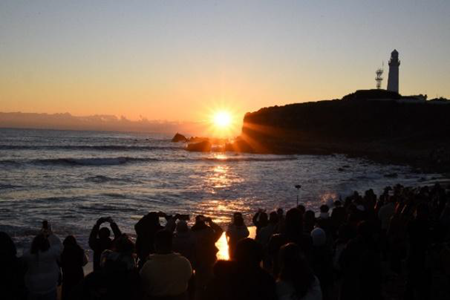
Cape Inubosaki, the easternmost point of the Kanto area, is a popular spot where you can enjoy the earliest sunrise in Japan. Here you can gaze at the majestic ocean, the waves as they crash onto the shore, and the pristine white lighthouse from the coast. You can also view the blazing orange sunrise from the top of the nearby Choshi Port Tower.
- Location: Inubosaki, Choshi City
- Access: 10-minute walk from Inubosaki Station (Choshi Electric Railway)
- Inquiries: Choshi City Tourism and Commerce Division TEL: 0479-24-8707
2.Maebara-Yokosuka Beach (Kamogawa City)
Come enjoy the first sunrise at one of Japan’s 100 Most Beautiful Beaches. This area is also popular among surfers venturing out to catch their first wave of the new year. The promenade along the coast is lined with palm trees, making it the perfect tropical place to stroll down on New Year’s Day.
- Location: Maebara-Yokosuka, Kamogawa City
- Access: 5-minute walk from Awa-Kamogawa Station (Jr Uchibo/Sotobo Lines)
- Inquiries: Kamogawa City Commerce and Tourism Division TEL: 04-7093-7837
3.Kanozan Kujukutani Observation Park (Kimitsu City)
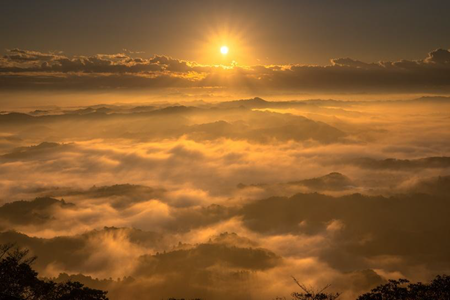
Below Shiratori Shrine is Kanozan Kujukutani Observation Park, where you can admire the view of the sprawling, connected mountains that make up the Kazusa Hills.
The duration of time when the sun becomes visible over the mountaintop, as well as when it sets beyond the horizon, is a particularly spectacular sight to behold. Coupled with the sea of clouds that float above the Kujukutani mountain range, it would be easy to mistake the scene for one straight out of a traditional ink painting.
- Location: 119-1 Kanozan, Kimitsu City
- Access: From the Kimitsu IC on the Tateyama Expressway, take Prefectural Road No. 92 for Kamogawa via Higashiawagura for about 25 minutes
- Inquiries: Kimitsu City Economic Promotion Division TEL: 0439-56-1325
4.Odayama Park (Kisarazu City)
At the top of Odayama Park, also known as the “forest of love,” hides a romantic hidden gem: Kimisarazu Tower. Not only can you take in views of the city, but you can even see the Aqua-Line expressway and as far as Tokyo Skytree!
- Location: 2-16 Oda, Kisarazu City
- Access: From the Kisarazu Station East Exit (JR Uchibo Line), take the Oda Loop bus, get off at “Koi-no-mori” bus stop and walk 5 minutes
- Inquiries: Kisarazu City Development Division TEL: 0438-23-8467
3) Recommended Hatsumode (New Year's Shrine Visit) Spots in Chiba
After seeing the first sunrise of 2026 and eating traditional New Year’s food, you’ll want to wrap up your Japanese Oshogatsu experience with “hatsumode,” the first shrine visit of the new year. Here are some famous places to enjoy the festivities, as well as some new spots to explore.
1.Chiba Shrine Myoken Hongu (Chiba City)
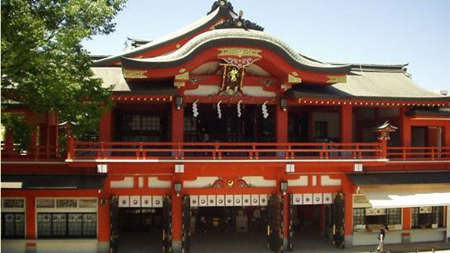
Chiba Shrine is the main shrine dedicated to the deity of the North Star, Myoken, and attracts nearly 700,000 visitors each year during the period of January 1st to 3rd.
Devotees from all over the country make the pilgrimage here to pray for good fortune and ward off bad luck, invoking the powers above that govern the destiny of all humans.
- Location: 1-16-1 Innai, Chuo-ku, Chiba City
- Access: 10-minute walk from JR Chiba Station or Keisei-Chiba Station; 8-minute walk from Yoshikawa-koen Station (Chiba Urban Monorail)
- Inquiries: Chiba Shrine
 TEL: 043-224-2211
2.Katsushika Hachimangu Shrine (Ichikawa City)
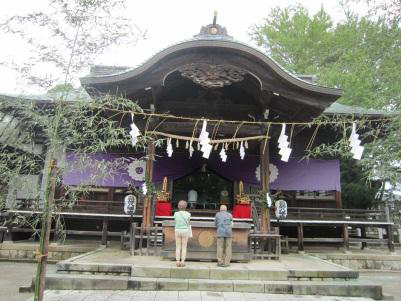
During the Kanpyo era (889 to 898) of the Heian period, the deity Hachiman was ceremonially transferred here from Iwashimizu Hachimangu in Kyoto, under the instruction of Emperor Uda. This garnered a religious following amongst members of the imperial court and various military commanders. In fact, it is said that Minamoto no Yoritomo, first shogun of the Kamakura shogunate, and Tokugawa Ieyasu, first shogun of the Edo shogunate, came here to devote themselves.
To the right of the main hall stands a large gingko tree estimated to be around 1,200 years old, which has been designated as a National Natural Monument.
- Location: 4-2-1 Yawata, Ichikawa City
- Access: 8-minute walk from Motoyawata Station (JR Sobu Line) or 5-minute walk from Keisei Yawata Station (Keisei Line)
- Inquiries: Katsushika Hachimangu Shrine TEL: 047-332-4488
3.Naritasan Shinshoji Temple (Narita City)
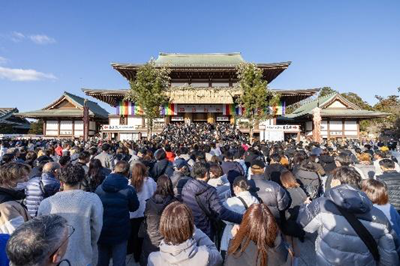
Known nationwide for its statue of the deity Fudo Myo-o, Naritasan Shinshoji is the head temple of the Chisan School of Shingon Buddhism and welcomes over 3,000,000 visitors during the first three days of the new year, the largest number of any temple in Japan. The famed Fudo Myo-o statue is the main object of worship and is believed to have been carved by Kukai, the founder of Shingon Buddhism. Since the establishment of the temple, monks have been performing daily Goma fire rituals that include writing prayers on wooden tablets or papers and burning them while reciting sutras.
Additionally, the temple grounds have an expansive 165,000 square-meter garden, Naritasan Park, which can be enjoyed during any season of the year.
- Location: 1 Narita, Narita City
- Access: 10-minute walk from Keisei Narita Station (Keisei Line) or Narita Station (JR Narita Line)
- Inquiries: Naritasan Shinshoji Temple TEL: 0476-22-2111
4.Nichihonji Temple (Tako Town)
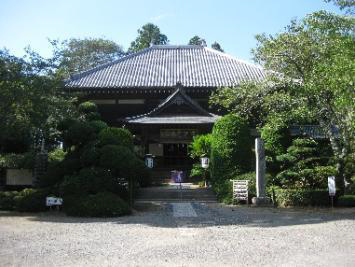
This is where Toki Jonin—the greatest supporter of Nichiren, founder of Nichiren Buddhism—spent the final years of his life. It later became a learning center called Nakamura Danrin for the Lotus Sutra, accommodating over 500 disciples who could be found studying the essence of the Lotus Sutra here. Over a period of 270 years, a total of 100,000 monks graduated and spread out across the nation. Eventually the monastery closed, and it now stands quietly in the middle of the forest as a monument frozen in time.
- Location: 1820-1 Minaminaka, Tako Town, Katori District
- Access: 20 minutes by taxi from Yokaichiba Station (JR Sobu Main Line) or Narita Airport Terminal 1 Station (JR Narita Line and Keisei Line)
- Inquiries: Nichihonji Temple TEL: 0479-76-3745
5.Awa Shrine (Tateyama City)
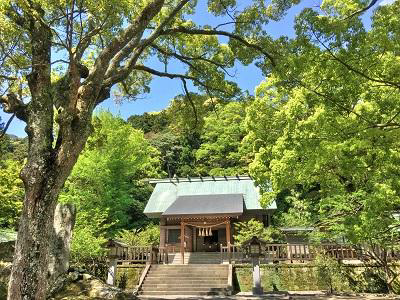
Awa Shrine is said to be founded by the god Ame-no-Tomi-no-Mikoto, who opened the land of Awa, enshrining the deity Futodama-no-Mikoto. According to historical texts such as the Kogo Shui and the Sendai Kujihongi, this sanctuary is over 2,670 years old and is revered by worshippers as the principal shrine of the Awa Province. Today, people visit to pray for traffic safety, good fortune, protection from misfortune, household safety, and business prosperity.
- Location: 589 Daijingu, Tateyama City
- Access: From Tateyama Station East Exit (JR Uchibo Line), take the JR bus bound for Awa-Shirahama via Awa-Kanbe, get off at “Awa Jinja-mae” bus stop, and walk 5 minutes
- Inquiries: Awa Shrine TEL: 0470-28-0034
6.Ishidoji Temple (Minamiboso City)
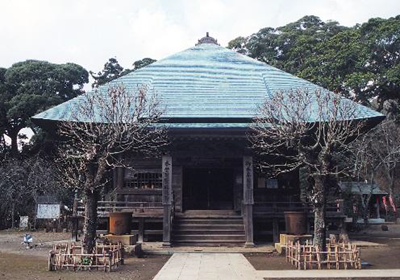
One of Japan’s three great Ishidoji (stone pagoda temples), this temple was deeply revered by the Satomi clan of the Sengoku period, made famous by the Satomi Hakkenden historic epic novel. The principal object of worship is a wooden statue of an Eleven-Headed Kannon, goddess of mercy, and has been recognized as an Important Cultural Property of Japan along with the temple’s various halls.
On New Year’s Eve, the temple rings Joya-no-kane bell from 11:45 p.m., offers mochi rice cakes to the first 108 visitors, and at midnight holds the Shushoe, the first service of the year, and a grand Goma fire ritual.
- Location: 302 Ishido, Minamiboso City
- Access: 30-minute (20km) drive from the Tomiura IC on the Futtsu-Tateyama Expressway
- Inquiries: Ishidoji Temple TEL: 0470-46-2218
7.Seichoji Temple (Kamogawa City)
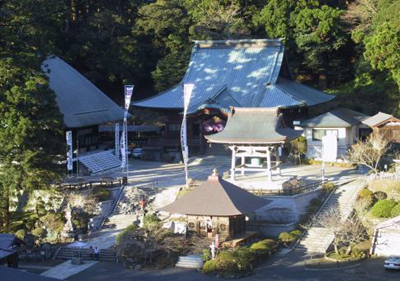
This is the head temple where the monk Nichiren first chanted the sacred phrase Namu Myoho Renge Kyo and established the Nichiren sect of Buddhism. It offers lodging, and those who stay overnight are given priority to ring the temple bell on New Year’s Eve. Guests can observe the annual water ritual, make their first prayers, see one of Japan’s earliest sunrises of the new year, and enjoy vegetarian Buddhist dishes and traditional new year’s cuisine (note: staying overnight requires a reservation). Starting midnight and continuing for one week, visitors can also receive a special prayer for warding off misfortune.
- Location: 322-1 Kiyosumi, Kamogawa City
- Access: About an hour drive from Kimitsu IC on the Tateyama Expressway
- Inquiries: Seichoji Temple TEL:04-7094-0525
8.Yatsurugi Hachiman Shrine (Kisarazu City)
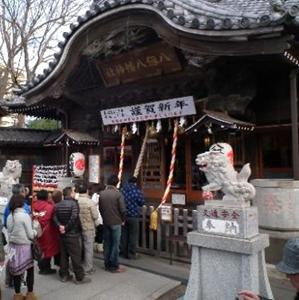
Associated with the legendary hero Yamato Takeru in Japanese mythology, Yatsurugi Hachiman Shrine serves as the principal guardian shrine of Kisarazu, often referred to lovingly as “Hachiman-sama.”
At 3 p.m. on December 31st, the shrine conducts a ritual that cleanses the sins and impurities of devotees that have accumulated over the past six months. At midnight, another ritual that calls upon the gods for an entire year of protection is performed.
- Location: 1-6-15 Fujimi, Kisarazu City
- Access: 3-minute walk from Kisarazu Station West Exit (JR Uchibo Line)
- Inquiries: Yatsurugi Hachiman Shrine TEL: 0438-23-8881
